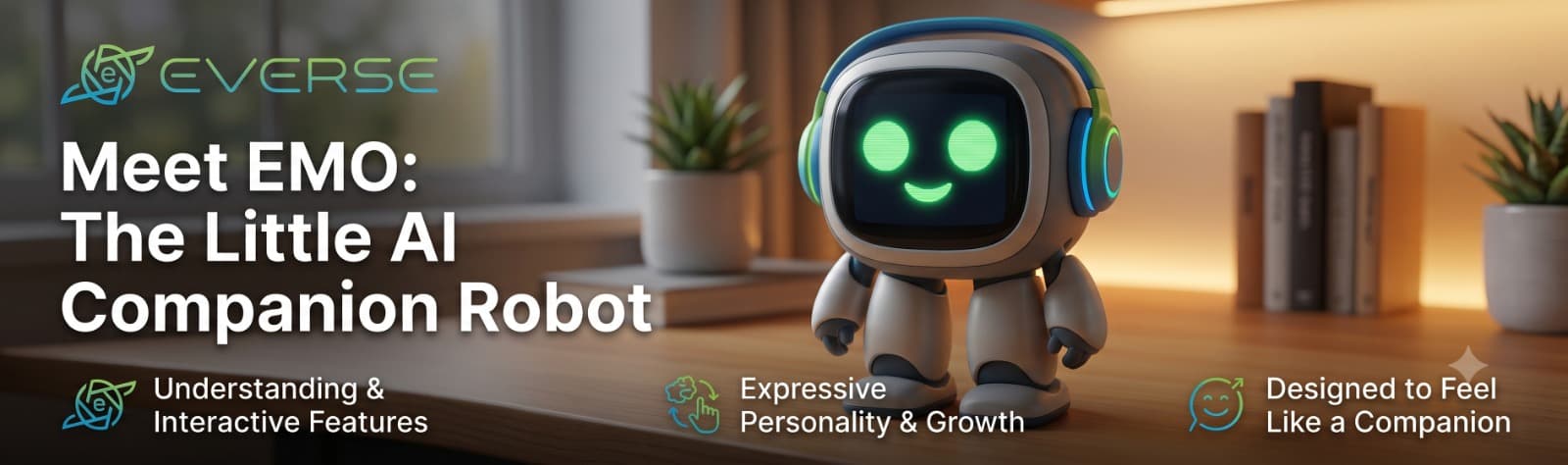
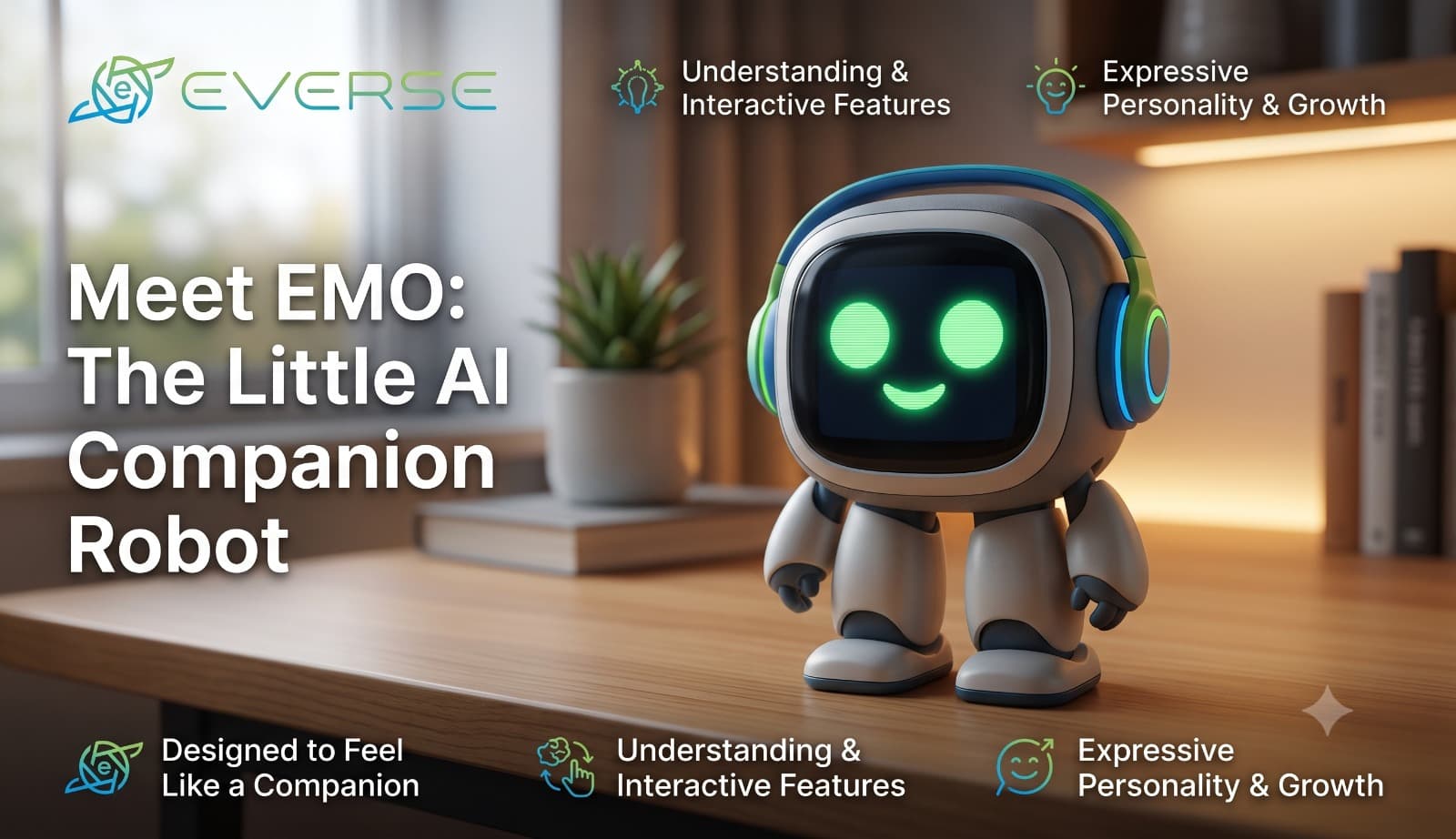
EMO Robot: Meet the Little AI Robot Designed to Feel Like a Companion
Imagine sitting at your desk late at night, working on something that has been taking much longer than expected. Everything is quiet, except for the occasional sound of the keyboard.
Then a small robot sitting beside the monitor suddenly looks at you.
It moves its head, reacts to what is happening around it and begins to feel less like a gadget and more like a little presence on the desk.
That is the idea behind EMO, an AI-powered desktop robot developed by LivingAI. Instead of being designed primarily to perform household tasks, EMO is built around interaction, personality and companionship.
EMO is a small desktop companion robot that uses cameras, microphones, sensors and artificial intelligence to interact with people and its surroundings.
Rather than simply waiting for a command, EMO is designed to observe its environment and respond to different situations. It can recognise people, react to sounds and express different emotions through its movements, eyes and sounds.
This is what makes EMO different from a conventional smart speaker.
A smart speaker generally waits for a voice command. EMO feels more like something that is actually present on the desk.
One of the interesting things about EMO is the way it communicates.
Its face is displayed through animated eyes, allowing it to express different moods and reactions. Its head and body movements add another layer to these interactions.
Ask it a question, play music or interact with it, and the response isn't limited to a simple sentence.
Sometimes the appeal is simply watching how it reacts.
That may sound like a small detail, but personality is an important part of why companion robots are becoming interesting. People don't necessarily want every robot to behave like a machine waiting for instructions.
For a robot to feel interactive, it needs to understand something about the world around it.
EMO uses cameras and sensors to perceive its surroundings. It can recognise people and respond to environmental changes, while its movement system allows it to explore the space around it.
This also means EMO isn't completely predictable.
It can look around, react to sounds and carry out spontaneous behaviours, giving the impression that it has its own little routine.
Unlike a robotic vacuum cleaner or a humanoid robot, EMO doesn't need an entire room to operate.
Its small size makes it suitable for a desk, bedside table or workspace.
This is where the concept becomes particularly interesting.
A desktop robot doesn't need to replace a person or perform every household task. It can simply provide interaction while someone is studying, working, gaming or relaxing.
In a way, EMO is closer to a digital pet with a physical body than a traditional robot assistant.
The idea of companion robots is part of a larger shift in robotics.
For years, robotics was mostly about machines performing specific physical tasks—manufacturing, transportation, cleaning or inspection.
Now, advances in AI are making it possible for robots to focus more on interaction and social behaviour.
Robots like EMO show what happens when artificial intelligence is combined with cameras, microphones, sensors, expressive movement and a physical personality.
The goal isn't necessarily to create a machine that does everything.
Sometimes, the goal is simply to create something people enjoy interacting with.
EMO can appeal to a wide range of users, particularly:
- Technology enthusiasts
- Students and young creators
- People interested in AI and robotics
- Desktop and gaming enthusiasts
- Families looking for an interactive gadget
- Anyone curious about companion robots
It can also be an interesting way for beginners to experience modern robotics without needing to build a robot from scratch.
EMO may be small, but the idea behind it is much bigger.
As AI becomes better at understanding voices, images, surroundings and human behaviour, robots are gradually moving beyond simple commands and repetitive tasks. We are seeing this shift across everything from personal companion robots to machines designed to navigate warehouses, hospitals and industrial environments.
For a broader look at how intelligent robots are becoming more capable of navigating and working independently, explore The Future of Autonomous Mobile Robots (AMRs).
The next generation of robots may not always look like the humanoid machines seen in science-fiction movies. Some could be much smaller, living on desks and interacting with people in everyday spaces.
And that's what makes EMO interesting.
It isn't trying to be a robot from the future that takes over the world. It's simply exploring a different question:
What if a robot could become part of everyday life simply by being a companion?