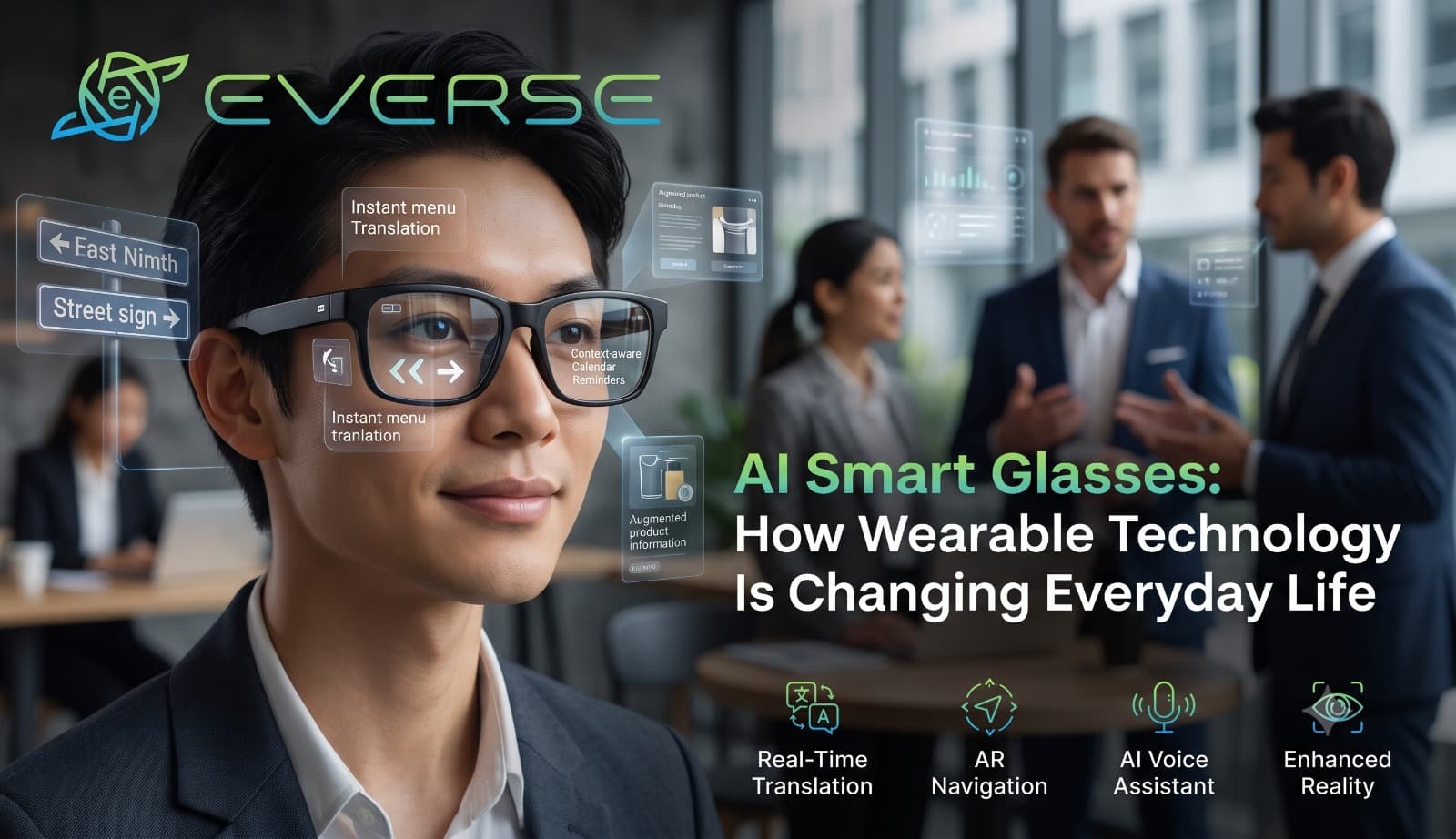
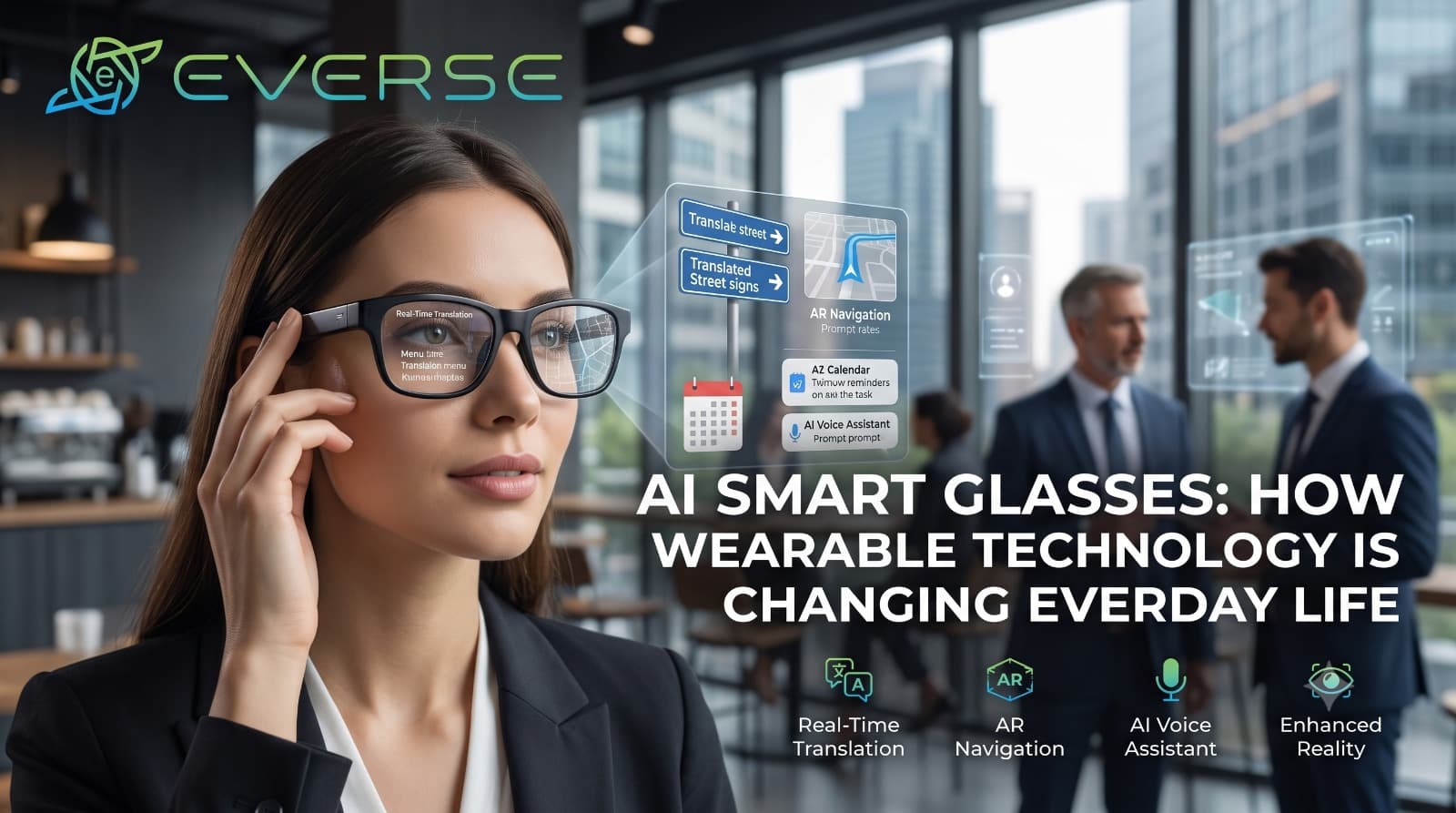
AI Smart Glasses: How Wearable Technology Is Changing Everyday Life
What if you could ask an AI assistant a question without taking your phone out of your pocket? What if your glasses could take a photo, translate a sign, give you directions, or tell you more about something you're looking at?
This is the idea behind AI smart glasses. Combining cameras, microphones, speakers, wireless connectivity, and artificial intelligence, these devices are turning ordinary eyewear into a new type of wearable computer.
AI smart glasses look similar to conventional glasses but contain technology that allows them to interact with the wearer and their surroundings.
Depending on the model, they may include cameras for capturing photos and videos, microphones for voice commands, speakers for audio responses, and sometimes displays that provide information directly in front of the user's eyes.
Modern AI glasses are increasingly designed to work alongside smartphones rather than replace them. Google's intelligent eyewear, for example, is being developed to provide access to Gemini, navigation, messaging, translation, and visual assistance while keeping the phone in your pocket.
One of the biggest advantages is hands-free interaction.
Instead of reaching for a smartphone, users can interact with an AI assistant using their voice. Depending on the device and software, they can ask questions, make calls, control music, or get information about their surroundings.
Cameras add another layer of functionality. A user can capture a photo or video simply by using a voice command or a control on the glasses.
AI can also analyse what the camera sees. For example, a user could ask about an object, read a sign, or request information about a place they are visiting.
Travel is another area where AI glasses could become particularly useful.
Instead of constantly looking down at a phone, users could receive directions through audio or, on display-equipped models, visual information directly through the glasses.
Real-time translation is another emerging capability. AI glasses can help interpret spoken language or translate written text, making communication in unfamiliar environments easier. Google has highlighted both navigation and real-time translation as features for its upcoming intelligent eyewear.
AI glasses can also function as wearable cameras.
For travel creators, vloggers, and social media users, this provides a first-person perspective without requiring a handheld camera. Instead of stopping to set up a camera, users can capture moments as they happen.
This could be particularly useful for travel, sports, demonstrations, tutorials, and everyday lifestyle content.
However, smart glasses aren't necessarily a replacement for dedicated cameras. Their main advantage is convenience and spontaneity rather than replacing professional camera equipment.
Not all smart glasses work in the same way.
Some models focus primarily on audio and AI assistance, using speakers and microphones while keeping the lenses visually similar to normal glasses.
Others incorporate displays that can show information such as directions, notifications, captions, or other digital content.
This distinction is important because display-equipped glasses can provide a more immersive experience, while simpler AI glasses can remain lightweight and visually similar to conventional eyewear.
The growing popularity of camera-equipped glasses also raises legitimate privacy concerns.
People around the wearer may not always know when they are being recorded, which has already led to restrictions and debates in some public spaces. Meta's AI glasses include a visible capture LED designed to indicate when photos or videos are being recorded.
Responsible use is therefore essential. Users should respect local laws, venue policies, and other people's privacy rather than treating wearable cameras like ordinary sunglasses.
AI smart glasses are still evolving, but the direction is clear: technology is becoming increasingly integrated into the things we already wear.
Instead of constantly interacting with screens, future devices could allow people to access information more naturally through voice, vision, audio, and lightweight displays.
For Everse, this evolution represents an exciting intersection of AI, cameras, consumer electronics, and wearable technology. As these systems become smaller and smarter, the boundary between traditional gadgets and intelligent devices will continue to disappear.
The future of wearable technology may not be about carrying more devices. It could be about making the devices we already wear significantly smarter.